
8 min
Zach Chmael
In This Article
If ChatGPT skips your company, the cause is usually mechanical: it cannot crawl you, cannot find you in its index, or lacks clear evidence.
Updated
TL;DR
🔎 Roughly 800 million people use ChatGPT weekly, so being absent is a real market gap.
🤖 AI crawlers fetched JavaScript in 11.5% of requests but executed none of it.
🧭 GPTBot hit a 404 on 34.82% of fetches, so broken paths quietly cost you.
🔗 87% of SearchGPT citations matched Bing's top results across 100 queries.
✅ Run 3 quick checks first: crawlable, indexed, and evidenced.
Why Your Business Isn't Showing Up In ChatGPT: A 2026 Guide To Showing Up in AI Answers
If your business does not appear in ChatGPT, the cause is usually mechanical, not mysterious: the model cannot reach your pages, cannot find them in the index it searches, or cannot see enough clear evidence to answer. That gap matters because roughly 800 million people use ChatGPT every week. When I look up a company that feels invisible, I check three things before touching the site: is it crawlable, is it indexed, and does a clear answer about it exist anywhere.
The scale of automated reading is easy to miss. Across one month on Vercel's network, GPTBot made 569 million fetches, and all AI crawlers combined made about 1.3 billion, close to 28% of Googlebot's 4.5 billion. Cloudflare measured GPTBot climbing from 2.2% to 7.7% of crawler traffic between May 2024 and May 2025, a 305% rise in raw requests.
The robots are visiting. The real question is what they can read once they arrive.
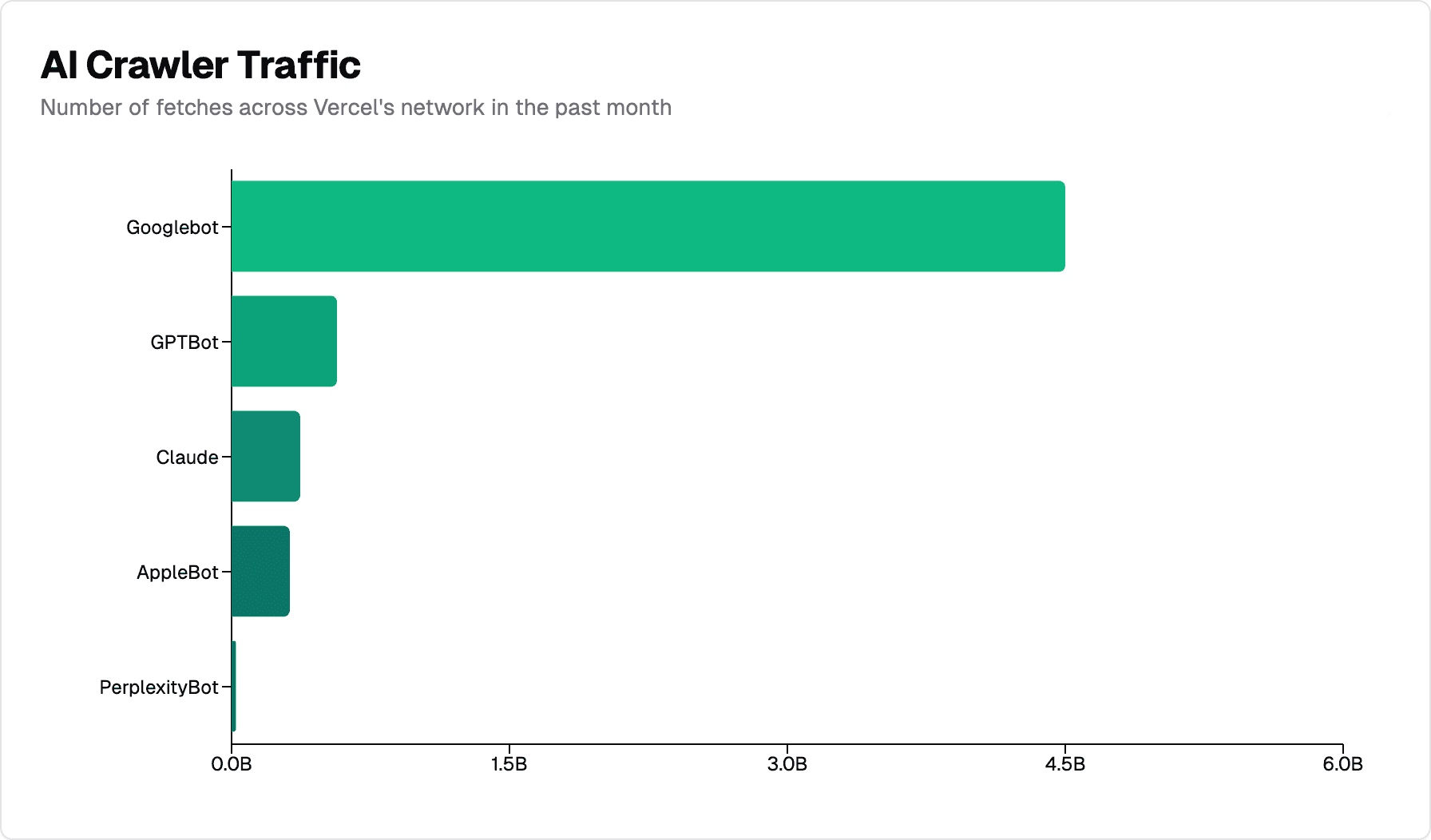
Source: Vercel.
What Should You Check First If ChatGPT Ignores You?
Start with the three checks that explain most cases, in order of speed. You can run all three in an afternoon without changing a single line of your website.
Ask ChatGPT with search on a buyer question in your category, and note which sources it cites.
Confirm your key pages return real text in plain HTML, not only after JavaScript runs in a browser.
Check that Bing has those pages indexed, since ChatGPT's browse path leans on that index.
If the answer names 3 competitors and never you, you have a visibility gap, not a ranking problem. That distinction decides everything you do next, so resist the urge to rewrite copy before you know which cause applies.
Which Of These Situations Describes You?
Most absent companies fall into a small set of recognizable situations. Find yours in the table, then follow the matching check and first action.
If you see this | Likely cause | What to check first |
|---|---|---|
ChatGPT says it has no information on you | Not crawled or not indexed | robots.txt and Bing index status |
It describes you with stale or wrong facts | Old or thin public evidence | homepage and about-page copy |
It recommends competitors, not you | Weak or missing proof | comparison and specification pages |
Your page ranks on Google but is blank to AI | JavaScript-only rendering | server-rendered HTML output |
Each row is a different job. Two of the four are pure access problems you can fix in a day, and the other two are evidence problems that take real editorial work.
Can ChatGPT Actually Reach Your Website?
Often the honest answer is no, and the reason is rendering. AI crawlers currently do not run JavaScript, so anything drawn only in the browser can read as a blank page to them.
In Vercel's month of data, GPTBot fetched JavaScript files in 11.5% of requests and Claude in 23.84%, yet neither executed it. Broken paths make the problem worse. GPTBot hit a 404 on 34.82% of fetches and chased redirects on another 14.36%, against Googlebot's 8.22%.
A crawler that spends a third of its visit on dead URLs collects far less of you. The deeper mechanics sit in AI Crawlers Don't Run Your JavaScript.
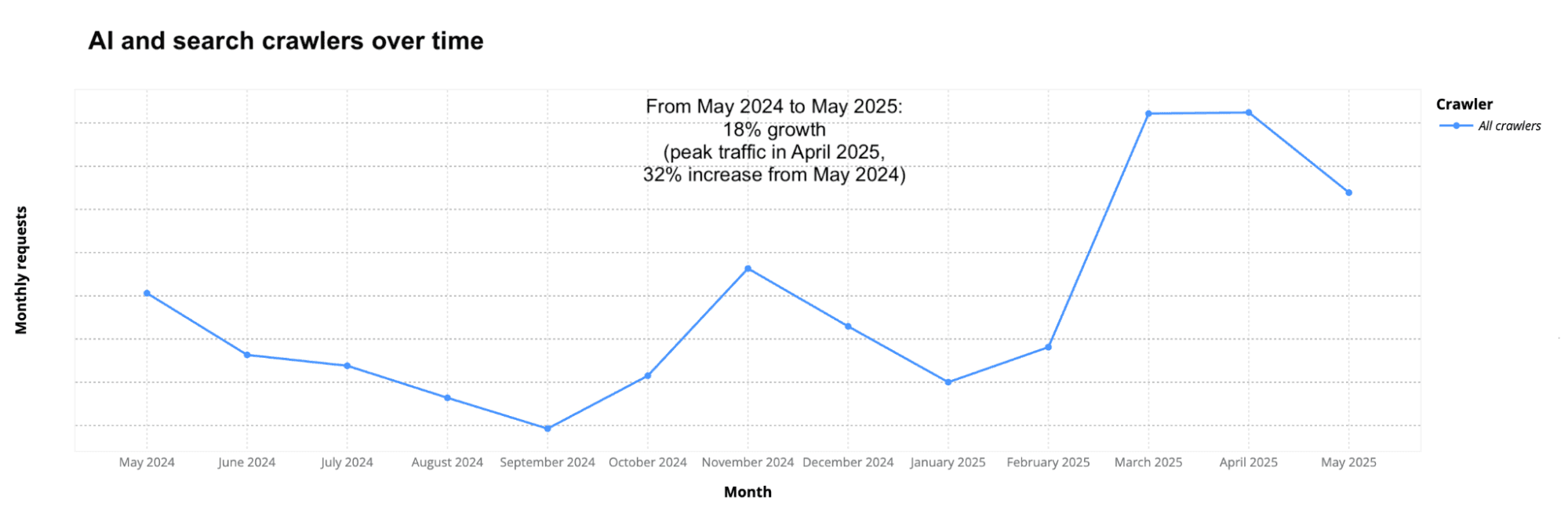
Source: Cloudflare.
Are You In The Index ChatGPT Reads?
ChatGPT's search does not read the open web live. It retrieves from a search index and then cites a few results, so a page missing from that index cannot be cited at all.
Seer Interactive checked 500 citations across 100 queries and found 87% of SearchGPT citations matched Bing's top organic results, versus 56% for Google. That sample is small, so read it as directional.
One vendor analysis of 548,534 pages reported ChatGPT cited only about 15% of the pages it retrieved. Being retrievable is necessary, and still not sufficient. Where those answers come from is unpacked in Where Do AI Citations Come From.
What Can You Actually Measure, And What Can't You?
You can observe more than people expect, and prove less than vendors imply. Keeping those two apart is the whole discipline.
You can observe which answers and sources appear for a fixed question on a fixed date, and whether your pages are crawlable and indexed. You can only infer why a model preferred a competitor, because the ranking is never disclosed. Traffic, leads, and revenue need your own analytics and CRM, not an AI-visibility tool reading tea leaves.
Whether an answer is fair or accurate still needs a human to judge it. No tool controls a ranking or guarantees a citation, and 1 public view count is not proof of a buyer. The limits of single-number dashboards are argued in There Is No Such Thing as an AI Visibility Score.

How Does Trovance Help You See Why You're Missing?
Trovance is built for exactly this diagnosis.
It runs a scan that observes how AI systems answer questions about your company: what they say, which sources they cite, and where they compare or recommend a competitor instead of you. Rather than collapse that into 1 score, it preserves the raw answers and the evidence behind them, so you can tell whether the gap is crawlability, a missing page, or thin proof.
From there it points at the specific asset that should exist, and helps you produce and publish the evidence a model can actually use. See how AI currently describes your company and which evidence may be missing or unclear, then decide what to fix first.
When you are ready, start with your own company and Scan my AI visibility.
The scan does not promise a citation or a ranking. It shows you the current answer and the sources shaping it, so your next edit aims at a real gap instead of a guess. That is the difference between reacting to 1 bad answer and running a repeatable check.
FAQs
Why doesn't ChatGPT know my business exists?
Usually because it never read you, or cannot find you in its index. AI crawlers may be blocked in robots.txt, your pages may render only through JavaScript, or your site may be missing from Bing, which ChatGPT's search path relies on. Fix access and indexing before you rewrite any content.
Does ChatGPT read my website live?
Not exactly. Its browse mode retrieves from a search index and then cites a few pages, rather than reading the open web in real time. If your important pages are not crawled and indexed, the model has nothing to pull, so it either skips you or answers from older training data instead.
Why does ChatGPT recommend my competitors instead of me?
Often because their proof is easier to find and match to the question. If competitors publish clear comparison pages, specifications, and third-party mentions, a model can cite them with confidence. When your evidence is thin or buried in scripts, you read as a weaker match, even when your actual product is stronger.
Will adding FAQ schema make ChatGPT cite me?
Not on its own. Structured data can help machines parse a page, but it does not force a citation or a recommendation. Models weigh whether clear, relevant evidence answers the question being asked. Focus first on making a real answer easy to find and verify, then treat markup as hygiene, never as a lever.
How long until my changes show up in AI answers?
It depends on crawling and indexing cycles that you do not control. After you publish, a crawler has to revisit, an index has to update, and the model has to retrieve the new page. That can take days or weeks, and some answers lean on training data that refreshes far more slowly than that.
Can I guarantee ChatGPT will mention my brand?
No, and any vendor promising that is overselling. You can improve the odds by being crawlable, indexed, and backed by clear evidence, but rankings and recommendations are neither disclosed nor controllable. Treat AI visibility as something you influence and measure over time, never as something you can simply purchase outright.
What is the first thing I should fix?
Start with access. Confirm your key pages return real content in plain HTML and are not blocked from AI crawlers, then verify that Bing has them indexed. Only after the model can reach and retrieve your pages does improving the evidence on those pages change what it actually says.