
A strong content brief locks 5 decisions before anyone drafts: the reader's job, the page's role, the claims it must support, the action it should earn, and the conditions for approval. It should leave room for writing while refusing unsupported claims, keyword-shaped filler, and a CTA pasted on after the answer is finished.
That makes the brief a decision contract rather than an outline. The writer still owns the language. The brief owns why this page should exist, what evidence can carry its argument, and how the team will know whether it finished the intended job.
What job should the content brief finish?
The brief should tell the team which decision the reader is trying to make and what this page must help them do next. It is not enough to name a topic. Define 1 audience, 1 situation, 1 primary question, 1 useful outcome, and 1 reason this page deserves to exist instead of another adjacent article.
Start with a sentence: "After reading this page, a reader in this situation should be able to make this decision." That forces the team to choose a job instead of collecting phrases. A founder comparing tools needs different proof from a marketer learning a category. A buyer diagnosing a wrong AI answer needs a different path from a team deciding whether to refresh an old page.
Google's SEO Starter Guide describes SEO as helping search engines understand content and helping users decide whether they should visit. That is a useful boundary for the brief: discovery matters, but the page still has to help a person make progress after the click.
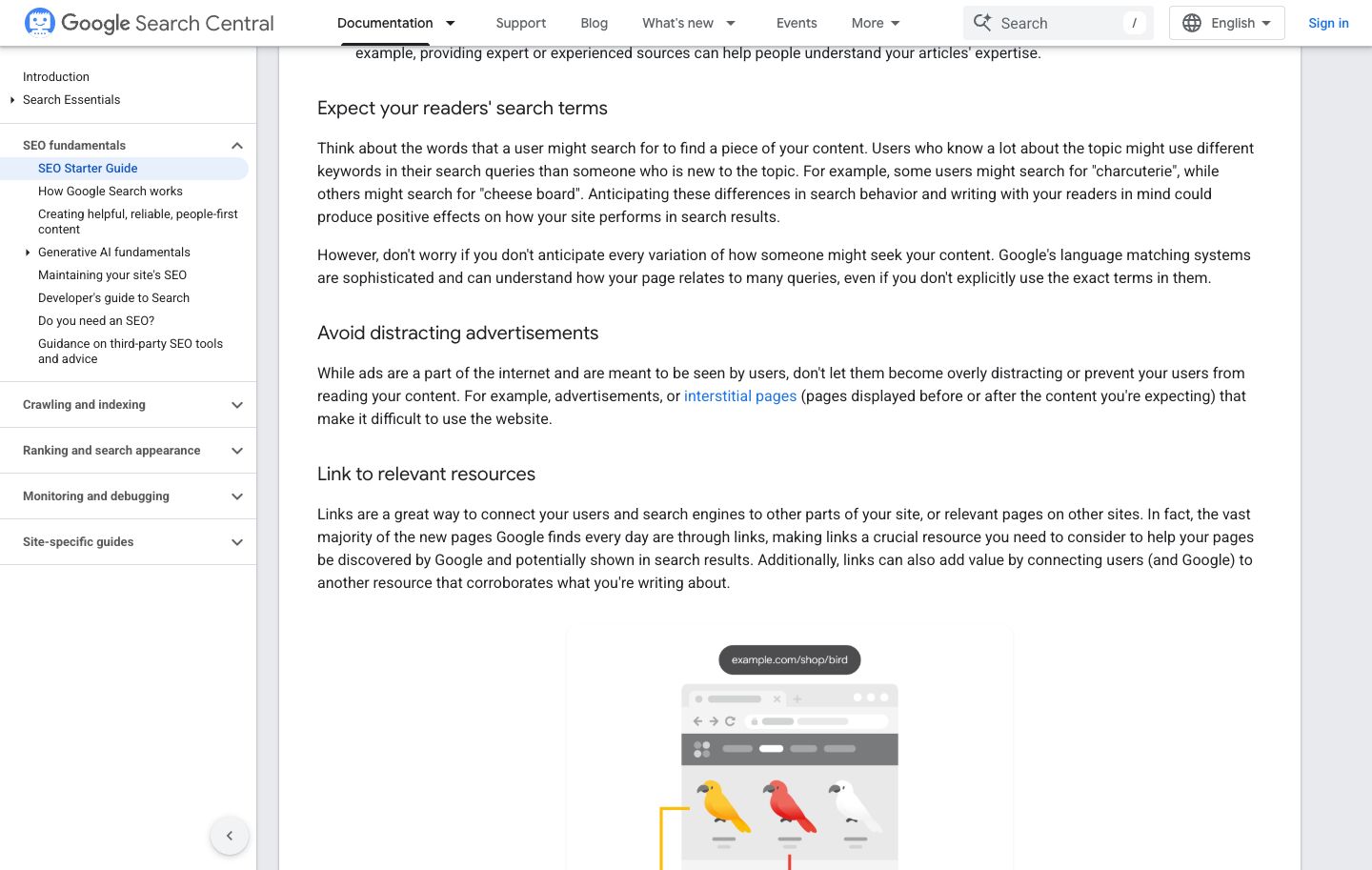
Source: Google Search Central, SEO Starter Guide. Screenshot captured September 6, 2026.
The same guide notes that an expert and a newcomer may search with different words. It also says writers do not need to anticipate every variation. Record 3 language layers instead: the reader's plain-language phrase, the category term, and the product or technical term. Use them to clarify the answer, not to force exact-match repetition.
A brief fails this first test when it says "write about content strategy" or lists 20 keywords with no decision attached. The writer cannot tell what to prioritize, what to omit, or why one example matters more than another. The draft becomes broad because the brief never chose a boundary.
Which inputs belong in a decision-ready brief?
Use 5 blocks: decision, audience and situation, page contract, evidence contract, and conversion contract. Each block should contain only the inputs that change the draft. If removing a field would not change the argument, source choice, structure, or next action, it is probably project metadata rather than briefing material.
1. Decision. Record the primary question, the answer the page expects to defend, and the reader's next decision. If the verdict is not known yet, mark it as a research question rather than smuggling a preferred conclusion into the assignment.
2. Audience and situation. Name who is reading, what they already know, what triggered the search, and what constraint shapes the choice. Budget, implementation burden, risk, urgency, and existing tooling often matter more than a generic persona label.
3. Page contract. Define whether the page should diagnose, explain, compare, instruct, or document. Choose 1 canonical URL and list nearby pages to link, refresh, or consolidate. This prevents the team from commissioning a near-duplicate just because a phrase looks new.
4. Evidence contract. List material claims, acceptable source types, required passages or data, freshness dates, known limits, and blocked claims. A source URL alone is not a claim boundary. The writer needs to know exactly what the source supports.
5. Conversion contract. State the next useful action, who should take it, what promise the CTA makes, and how the action will be measured. Keep page behavior, product activation, qualification, pipeline, and revenue as separate stages.
I recommend keeping these 5 blocks on 1 reviewable page. A brief becomes harder to govern when the buyer question lives in one document, sources in another, conversion in a ticket, and claim limits only in someone's head.
How should proof be specified before drafting?
Specify proof claim by claim. For every material assertion, record 4 fields: the exact claim, the supporting source or owned evidence, the conditions that limit it, and the allowed language. Then classify it as supported, inference, or blocked so a fluent draft cannot silently turn uncertainty into fact.
Google's people-first guidance asks whether content provides original reporting or analysis, treats the topic substantially, goes beyond the obvious, uses descriptive headings, makes sourcing clear, and demonstrates expertise. Those questions belong in the brief before they become a final-page checklist.
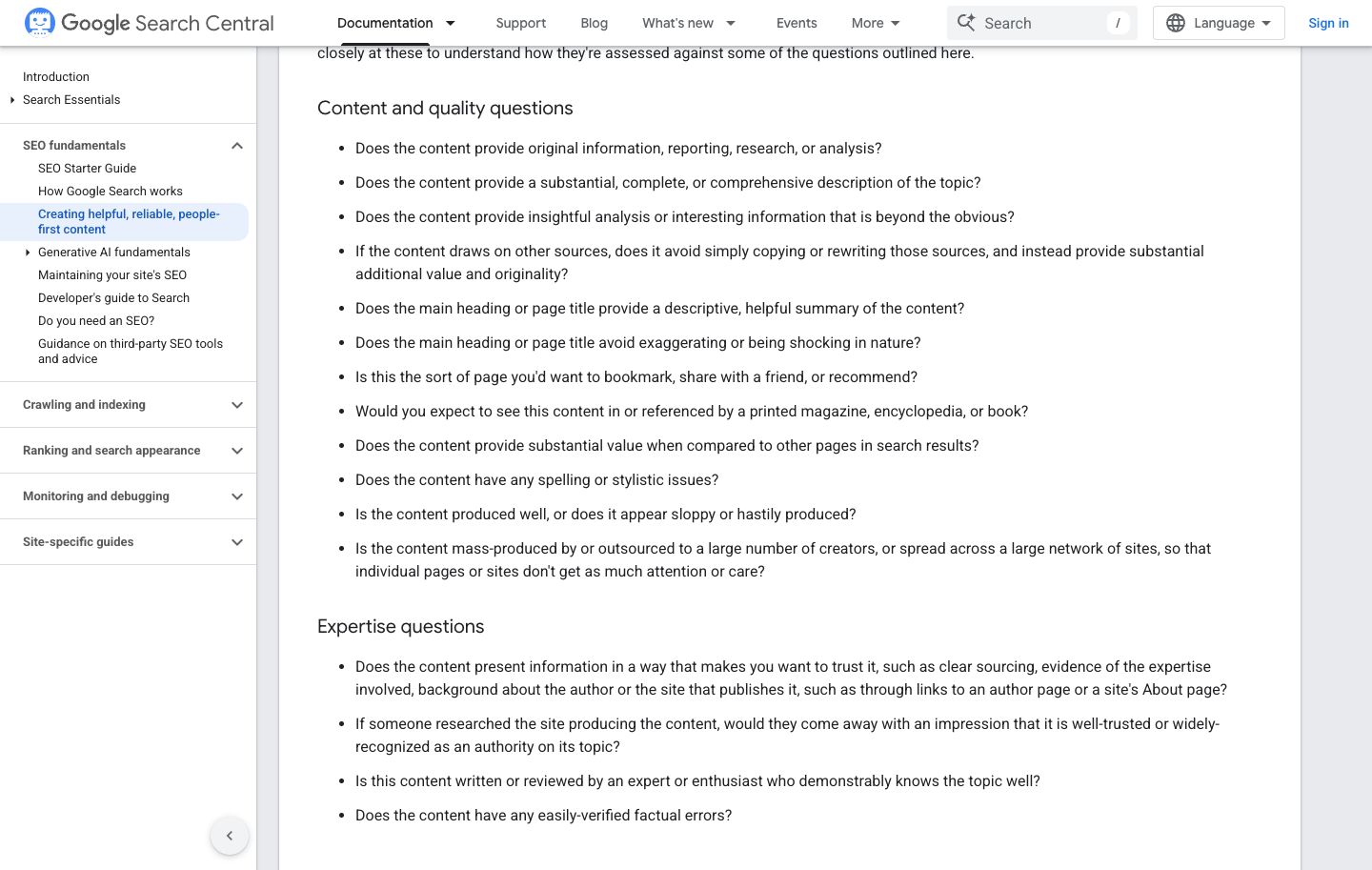
Source: Google Search Central, Creating helpful, reliable, people-first content. Screenshot captured September 6, 2026.
Turn that guidance into 3 evidence states:
- Supported: the source or owned evidence directly carries the claim under recorded conditions.
- Inference: the evidence supports a narrower observation, while the implication still needs interpretation.
- Blocked: the claim is material but lacks sufficient evidence, conflicts with a stronger source, or exceeds the method.
Then add a source-use note. A benchmark might support a figure for its own sample while saying nothing about causality or your market. A product page can establish the vendor's published capability, while a test is needed to show implementation. A customer quote can describe one experience, while cohort data is needed for a general outcome claim.
This is the difference between research storage and drafting permission. The brief should not merely say "use this report." It should say which sentence the report supports, what context must travel with the number, and which stronger conclusion remains unavailable.
How do you connect the answer to conversion?
Choose 1 next action that continues the reader's job. Define the page promise, CTA promise, destination, and event separately. A diagnostic article can lead to a scan; a comparison can lead to a real workflow trial; a technical guide can lead to a test. The transition should feel like progress, not an interruption.
Use a 4-step conversion path:
- 1. Satisfy the question. Give the verdict and enough detail for the reader to act without the product.
- 2. Expose the remaining work. Show what still requires the reader's own data, sources, or judgment.
- 3. Connect the mechanism. Explain how the product performs that specific next job.
- 4. Instrument the action. Record the destination and event needed to observe the handoff.
Google Analytics' current recommended-events guidance says prescribed event parameters provide added context and more useful reporting. Apply that principle to the brief: name the intended action and the context required to interpret it. A click, signup, scan start, activation, qualified opportunity, and closed deal are 6 different states.
Do not make the CTA carry a promise the article has not earned. "See how AI currently describes your company" is observable. "Increase revenue from AI search" requires a separate causal and attribution chain. The brief should state this boundary so the writer does not have to rediscover it during review.
What should the writer or AI system receive?
Give the writer a bounded package, not a prewritten article. It should contain the primary question, early verdict, decision path, claim ledger, source passages, visual plan, internal links, conversion contract, exclusions, and acceptance checks. That is 10 inputs, but each one should change the work.
A practical handoff can use this structure:
| Brief field | Required decision | Failure signal |
|---|---|---|
| Buyer job | One reader, situation, question, and decision | Topic or persona without a decision |
| Verdict | The answer the evidence can defend | Conclusion chosen before research |
| Page role | Diagnose, explain, compare, instruct, or document | Several jobs with equal weight |
| Claim contract | Supported, inference, or blocked | Source list without allowed claims |
| Visual plan | Evidence image and owned product media | Decorative image presented as proof |
| Conversion | One useful next action and destination | Generic CTA pasted onto every page |
| Review | Named gates and stop conditions | Approval based on fluency alone |
Do not specify every heading unless order is essential to the decision. Give the writer the required questions and evidence sequence, then let the argument find its cleanest shape. Over-prescription produces drafts that satisfy the template while losing the reader.
An AI drafting system needs the same boundaries in more explicit form. Separate instructions from source text, preserve canonical URLs and dates, and mark quotations as exact.
Require the system to flag missing support rather than complete the sentence from model memory. The goal is not 0 judgment; it is visible judgment at the places where error matters.
How should the team review the finished draft?
Review in 4 passes: intent, claims, experience, and conversion. Stop on a failed claim gate before polishing tone. Confirm that the opening answers the primary question, every material assertion stays inside its evidence, the page works on mobile, and the CTA leads to the promised next action.
Pass 1: intent. Can a reader identify the verdict in the opening? Does every major section help the same decision? Are adjacent questions linked rather than absorbed until the page loses focus?
Pass 2: claims. Can a reviewer trace each material fact to the correct source? Did limitations travel with figures and study results? Are product capabilities separated from tested implementation and real-world outcomes?
Pass 3: experience. Does the page scan cleanly on desktop and mobile? Are tables contained, evidence images readable, source lines visible, links descriptive, and headings concrete? Does the article sound like a person making choices rather than a template filling space?
Pass 4: conversion. Does the product bridge match the remaining job? Does the rendered CTA reach the intended URL? Is the event definition specific enough to distinguish a click from activation or a commercial outcome?
I would rather hold 1 polished draft with a broken evidence chain than publish it because the calendar says the slot is due. A good brief makes that stop condition explicit before sunk cost turns review into negotiation.
How does Trovance turn a content brief into accountable work?
Trovance starts before the outline. It observes the answer, citations, comparisons, and recommendations attached to a real buyer question, then preserves that evidence as the basis for diagnosis. Your team can see whether the next move is a new page, a refresh, a clearer claim, stronger proof, a technical repair, or no content action at all.
From there, Trovance connects the question to the source packet, claim boundaries, proposed asset, and review state. That creates a visible path from market evidence to production instead of handing a writer a keyword list and hoping the draft solves the right problem. The workflow keeps human judgment at the decision points, records what was approved, and gives the team a stable baseline to observe again after the work is published.
The result is a brief with a reason to exist, evidence the writer can use, and a next action the reader can understand. Your content team spends less time reconciling disconnected research, dashboards, and feedback, while every recommendation remains tied to the buyer question that triggered it.
Start your free trial to observe a real question, inspect the sources shaping the answer, and turn the most important gap into a reviewable content decision.